Independent project
SI Experiment in progress
An early-stage experiment. I’m open to conversations with potential collaborators and early supporters.
SI Engineer & Full-Stack Developer. I ship SI products end to end: model integration, full-stack apps, and the cloud they run on. Engineering and autonomous-systems work first; design and creative work below.
Independent experiments and client work, from model integration to the interfaces people use.
An early-stage experiment. I’m open to conversations with potential collaborators and early supporters.
Built an SI-powered creator platform end to end, from web and mobile experiences to model services, real-time infrastructure, and payments.
Mobile: React Native and Expo, with native calling, camera integration, and EAS Build releases.
Model services: FastAPI inference, LoRA/PEFT workflows, and llama.cpp quantization.
Voice pipeline: Pipecat orchestration, Deepgram speech recognition, and ElevenLabs voice, with Socket.IO and Redis.
Creator protection: ArtGuard upload protection and provenance verification.
What's running in production across my projects.
My differentiator: unmanned-systems training at Embry-Riddle, applied to autonomy in code. Reinforcement learning, computer-vision perception, and flight control.
An end-to-end autonomous drone-racing pilot, built solo to the SI Grand Prix qualifier spec as an independent deep-dive into flight autonomy: a reinforcement-learning policy that flies a simulated quadrotor through race gates from onboard vision, trained in simulation, exported to ONNX, and bridged to flight hardware over MAVLink.
Live sites I've designed and built, full-stack, front to back. Hover for the name, click any to see details.
End-to-end game development, built in Unity, with custom 3D models and environments modeled in Blender, original sound design, and hand-crafted game mechanics. Real-time 3D for the web with Three.js and WebGL. From full custom games to interactive apps. Tap any tile to view full screen.
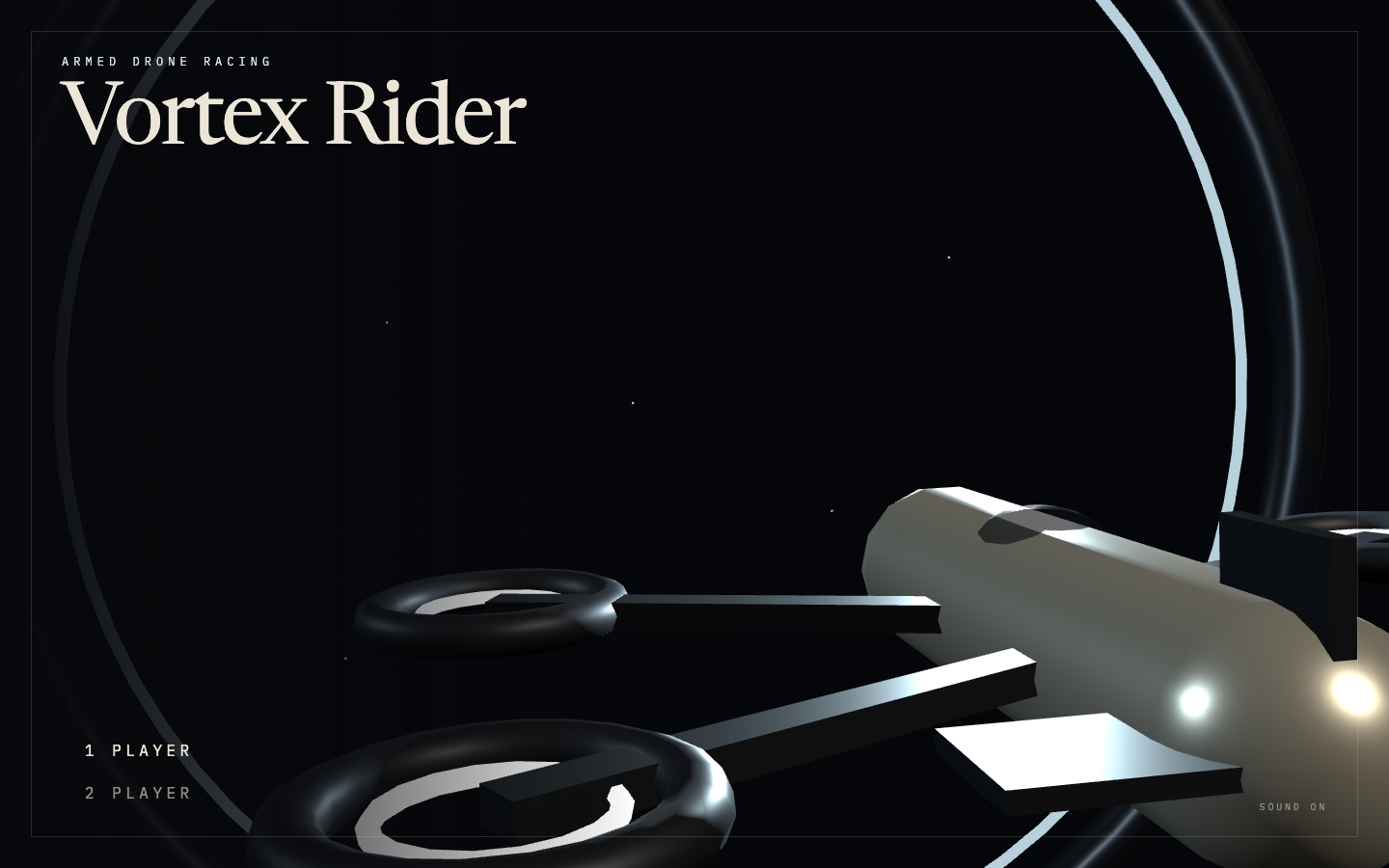
Armed drone racing. Four gates. The last one leaves the ground.
A browser drone race with Mario Kart energy. Fly a quad solo against the SI or invite a friend for 2 player. Four courses: The Yard, Spire Cut, Rift Gate, and Apogee. The last one leaves the ground.
Updated continuously. Full app available soon.
1 player: Free lets you choose any course, with Jun Park and Leda Moss racing alongside you and no mark. Duel puts you against Ada Venn — beat her to open the next gate. 2 player: invite a friend and race them.
The Yard — 831 m, 2 m climb, 20 m pinch. A trail; brighter ground is higher. Spire Cut — a lane up between the towers. Rift Gate — the canyon, with a shear wandering the fourth sector. Apogee — 853 m, 10 m climb, 18 m pinch. An open ring with nothing under the lane; brighter road is higher.
Needle, Kestrel, and Hull are ready. Cinder is sealed. Kestrel’s note: the corner stays honest once the speed is already up.
Ren is corners. Ivo is arms fast. Nia is top end. Seth takes a hit.
Explore the series. A different world in each collection.
A curated collection of my math and generative art. Points, waves, and repeating forms, set in motion. Studies loop silently as you explore.
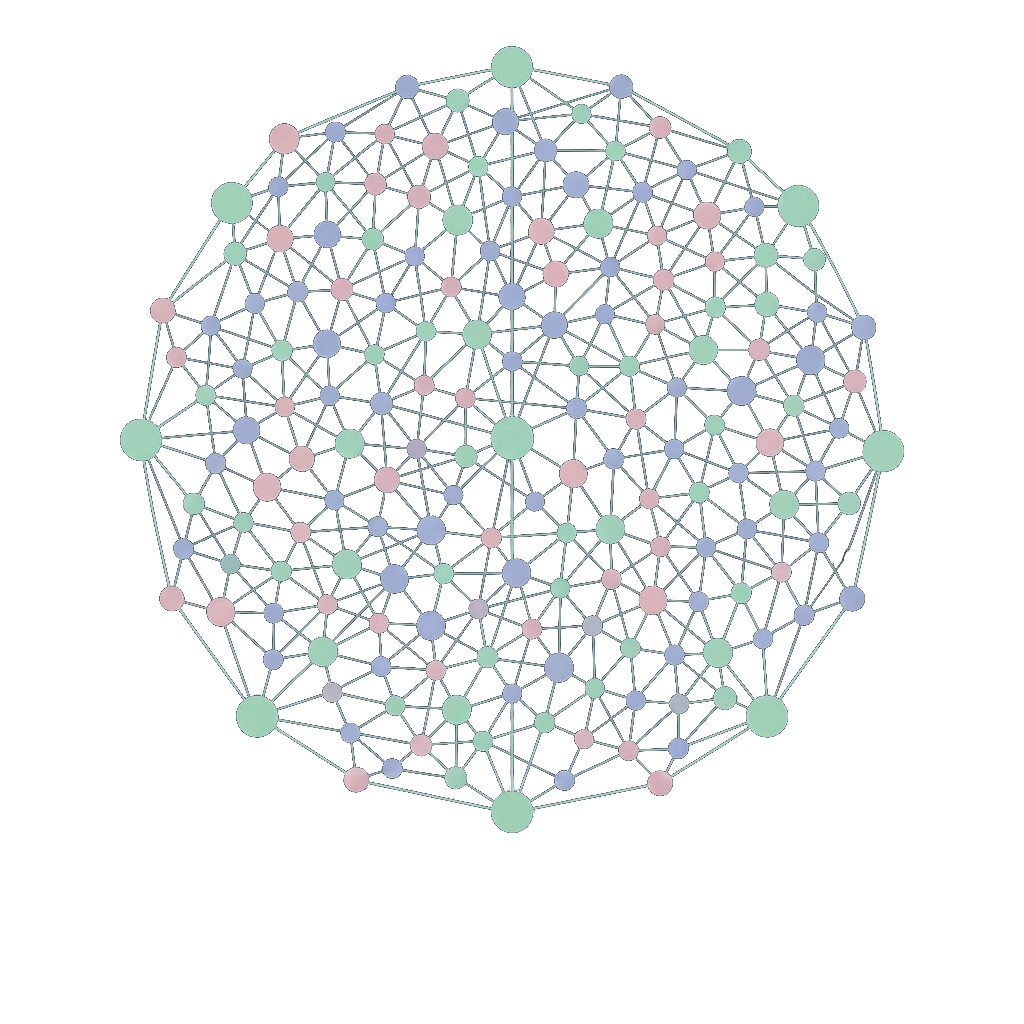
What if time is created by returning?
A moving constellation of points and connections, built around a question: what if time is created by returning? A generative study of repetition, return, and time.
An exploration of correlation, in violet and light.
Two points, one coordinate. Coded in Python. An artistic response to the idea of spatial correlations in a two-photon state, inspired by the paper below.
The research uses interference and coincidence imaging to reconstruct the amplitude and phase of spatial biphoton states.
Nature Photonics · Interferometric imaging of amplitude and phase of spatial biphoton states ↗Please keep your light body inside the ride at all times ✨
Made in Python with Grok. FFmpeg assembled the frames; no image model was used. Every pixel is mapped to a radius and an angle. The angle is folded into six mirrors, and a 1/r mapping stretches the centre into a seemingly endless tunnel. Time carries you through it. Red and blue are sampled a couple of pixels apart, splitting the colour along the edges.
Perhaps what we call the limits of reality are simply the limits of our perspective.
What if our entire universe is just one cell in an unimaginable computation, running alongside countless others? Maybe the real mystery isn’t what’s inside our universe. It’s what we’d discover if we could pull the camera back.
A simulation theory thought experiment, visualized through generative code and inspired by Nick Bostrom’s simulation argument. A simulated universe wouldn’t necessarily be an unreal one. The universe-as-a-cell idea is speculation, not established science.
Nick Bostrom · The Simulation Argument ↗What if the brain isn’t the source of consciousness, just one of its shapes?
A tree senses. A slime mould learns. A flock moves as one, with no leader. Inspired by starling murmurations, slime mould intelligence, and strange attractors. Nature coordinates at extraordinary scale with no central controller. Whether that reaches subjective experience remains an open question. Made in Python.
Every seed turns the same small amount from the last. Nothing ever lines up.
Made in WebGL with Claude. It’s a GPU shader that computes every pixel live. No image model, no footage and no editing. The pattern is a sunflower. Each lens sits 137.5° around from the one before it, the same rule a sunflower head follows to pack its seeds. Every pixel finds its nearest seed, and that seed’s place in the sequence decides its color. Each lens breathes on its own rhythm. The spirals you see are Fibonacci numbers, and they appear without being drawn. The colors come from a palette that imitates the shifting hues of light in soap film and oil. It’s an imitation of how those colors look, not a physical simulation. The loop is seamless, so it can run forever.
Vogel · A better way to construct the sunflower head (1979) ↗Press kits and brand pieces. Open one to use the links in the file.
Selected frames. Tap any image to view full screen.
Books, essays, and ongoing writing. Latest entries below.
A studio for building soulful, future-facing digital experiences: web, brand, and SI-driven products. Tell me about your project and let's create it together.
visionspace.global ↗Pick a section. Each card opens that part of the shop.